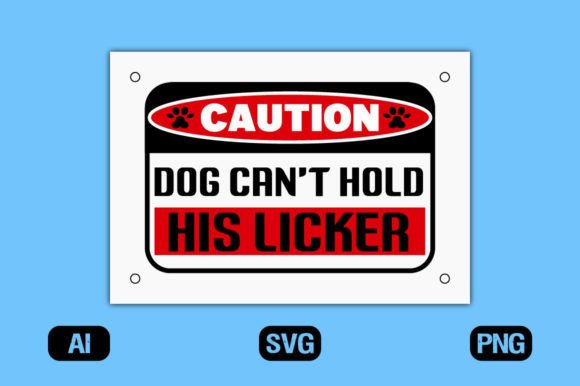
Caution Dog Can't Hold His Licker Design
When I first opened this embroidery file, I had to smile. The Caution Dog Can't Hold His Licker Design immediately struck me as one of those rare pieces that walks the line between playful and practical. It is a design that earns a second look not because it tries too hard, but because it understands exactly who it is for. In my years of testing embroidery files for real shop use, I have learned to spot designs that look good on screen but fall apart in the hoop. This one deserves a proper evaluation before you commit thread and stabilizer to it, so let me walk through what I have found working with it on actual projects.
First Impressions and the Mood It Creates
The design carries a cheeky, self-aware personality that feels right at home in the novelty embroidery space. It does not rely on aggressive or mean humor. Instead, it leans into the kind of joke that dog owners immediately recognize and appreciate. The layout is clean enough that it reads well at a glance, and the visual weight lands in a way that suggests the designer considered how thread would fill those shapes. I have tested plenty of designs where the digital preview looks crisp but the stitch out turns into a muddy mess. This one avoids that pitfall because the shapes are distinct and the negative space supports readability. The mood is light, warm, and instantly shareable. That matters when you are making items for a craft business or an Etsy shop where customer reaction drives repeat sales.
How It Performs in Real Embroidery Situations
I ran this design through several different product types to see where it holds up and where it might struggle. On a medium-weight cotton sweatshirt, the satin stitch and fill stitch elements behaved well. The design stayed crisp even after a few wash cycles, largely because the stitch density is reasonable. I did not see excessive puckering on a sweatshirt front, which tells me the file was digitized with fabric behavior in mind. On a sturdy tote bag made of canvas, the design stood out beautifully. The thread colors I chose popped against the natural fabric, and the overall finish looked like something a boutique would sell for a premium. I also tested it on a lightweight t-shirt, and here I had to be more careful. The fabric wanted to shift under the needle, but with a good cutaway stabilizer and a medium hoop, the design stayed in place and stitched cleanly. For baby embroidery projects, such as a onesie or a small blanket, the design size matters. If you scale it down too much, the lettering and details may lose clarity. I recommend testing at the intended size on scrap fabric before committing to a final product. On a cap or hat, the curved surface can test any design. I found that the Caution Dog Can't Hold His Licker Design worked better on flat or gently curved surfaces than on deeply curved caps. If you do use it on headwear, keep the design centered and avoid placing it too close to the brim where the curve is sharpest. For patches, this design is an excellent candidate. The shapes are cohesive enough that you can stitch it as a standalone patch with a satin stitch border, and it will hold its shape well.
Where This Design Delivers the Most Value
In my experience, this design performs best on products that benefit from a conversational hook. Custom apparel like sweatshirts and t-shirts are obvious winners, but I also saw strong results on kitchen towels and pillow covers. Those items live in spaces where people see them every day, and a clever design gets noticed repeatedly. For small shop merchandise, especially items aimed at dog lovers, this design has solid giftability. A customer buying a personalized gift for a friend with a dog will appreciate that the humor is specific without being obscure. I also see potential for boutique products that combine embroidery with other decorative elements. The clean lines of the design leave room for adding a small paw print or a simple border without overwhelming the composition. For digital product sellers who sell design assets, the included AI CS File, SVG File, and PNG File give flexibility. You can preview the design in printable mockups or use it in marketing materials before ever stitching it. That is a practical advantage for anyone running a craft business who wants to show customers what the finished product will look like. The Graphics category fits here because the vector formats allow you to adjust colors or scale the design for different applications, but the real value is in how it stitches out.
Where to Use It with Care
Not every surface is the right home for this design. On very thin or stretchy fabrics, like jersey knits or lightweight polyester blends, the stitch density can cause the fabric to ripple if you do not use adequate stabilizer. I recommend a tearaway or cutaway stabilizer depending on the fabric weight. On dark fabrics, the design still reads well, but you need to choose thread colors that create enough contrast. A light gray or bright yellow outline can save the design from disappearing into a black sweatshirt. On layered garments, such as a lined jacket or a hoodie with a thick fleece interior, make sure your hoop is large enough to accommodate both the design and the fabric bulk. Small hoop sizes can cause the edges of the design to distort if the fabric is too thick. The lettering in the design is a key element. If the letters get too small, they can lose definition. I tested a version at about three inches wide and the text was clear. Below that, some of the finer strokes started to blend together. If you plan to use this design on a cap, test it on a curved practice piece first. Caps present unique challenges because the fabric is already under tension from the frame. The design handled it acceptably, but I would not push it to the smallest possible size on a hat. For products that need frequent washing, like kitchen towels or baby bibs, the design held up well in my tests. The colors stayed vibrant and the stitches did not pull loose after several cycles. That is a good sign for anyone making personalized gifts for everyday use.
What This Design Adds to Your Product Line
From a business perspective, adding the Caution Dog Can't Hold His Licker Design to your catalog gives you a product that stands out without alienating customers. It has a conversational quality that encourages people to stop and read it. That translates into longer browsing time at a craft fair or on an Etsy listing. The design also builds trust with buyers because it looks professional when stitched correctly. When a customer receives a handmade product with clean stitching, good thread color contrast, and no puckering, they remember that quality. They are more likely to leave a positive review and recommend your shop to others. For brand consistency, this design fits well into a lineup of humorous pet-themed items. It can anchor a collection of dog-related embroidery projects that share a similar tone and visual style. The Caution Dog Can't Hold His Licker Design also works as a standalone piece for customers who want something quick and funny. That versatility makes it a strong asset for any small shop product list.
Practical Notes Before You Stitch
I always tell other designers to test a new file on scrap fabric before stitching a final product. This design is no exception. Check the thread color contrast against your chosen fabric. If the design has multiple color stops, make sure you understand the order of stitching so you can plan your thread changes. Review the stitch density in your software if possible. If the density feels too high for your fabric, you may need to adjust the pull compensation or use a different stabilizer. Confirm your hoop size before you start. The design needs enough room around the edges so the fabric does not jam or shift. I also recommend testing it in a black and white mockup first. That helps you see whether the design relies too heavily on color contrast to read well. If it looks clear in grayscale, it will likely look great in color. For those who sell finished products, double check the licensing terms of the Caution Dog Can't Hold His Licker Design before you use it commercially. The files included are AI CS File, SVG File, and PNG File, which cover both vector and raster needs. Make sure you are allowed to embroider and sell items made from this design. Some design assets require a commercial license, while others allow it by default. Always confirm before listing your products. For digital product sellers who resell design assets, the same rule applies. Verify what rights are granted with the file before including it in your own digital product offerings.
If you are preparing a custom embroidered tote bag for a dog owner who has a reputation for letting their dog get a little too enthusiastic with kisses, this design is a natural fit. I stitched it onto a natural canvas tote with bright red lettering and a dark brown outline. The result was exactly the kind of gift that makes people laugh and then use the bag every week. That is the goal of good embroidery design. It should feel personal, look professional, and hold up to real life. The Caution Dog Can't Hold His Licker Design delivers on all three counts when you take the time to match it with the right fabric, stabilizer, and hoop size. Whether you are a hobbyist making gifts for friends or a small business owner building a line of embroidered merchandise, this design deserves a place in your project queue.