Running Boxer Puppy Dog Vector Cut File
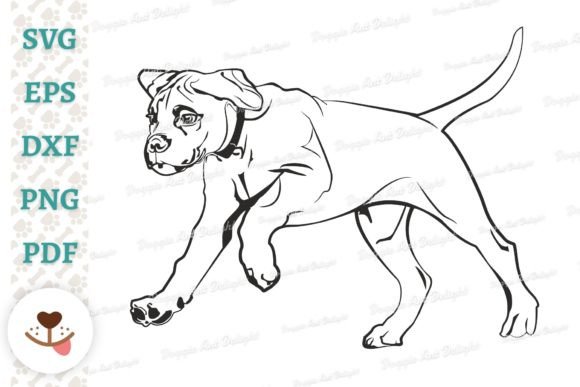
When I first opened the Running Boxer Puppy Dog Vector Cut File from Doggie Art Delight Studio, I was immediately struck by the sense of motion captured in the linework. This isn’t a stiff, posed portrait. The puppy is mid-stride, ears flopping, tail up, with that unmistakable Boxer energy that anyone who knows the breed recognizes right away. The shape is clean without being oversimplified, and the layout gives it a natural forward momentum that works beautifully on products where you want the design to feel alive rather than static. As someone who has tested hundreds of vector files for embroidery conversion, I can tell you that the personality of the original artwork matters a great deal once you translate it into thread. This one brings warmth and playfulness to the table right from the start.
First Impressions: Mood, Shape, and Embroidery Potential
The mood here is joyful and lively. It’s the kind of design that makes people smile, whether they are Boxer owners or just dog lovers in general. The puppy is rendered with enough detail to capture breed characteristics—the strong jaw, the cropped ears if that’s your preference, the muscular little body—but it avoids excessive complexity that could cause trouble in smaller hoop sizes. For embroidery, that balance is critical. A design that looks great on screen can turn into a muddy mess if the stitch density is too high or the tiny details are too fine for thread to reproduce cleanly. In this case, the vector file gives you a strong foundation to work with. It belongs naturally on custom apparel like a toddler’s sweatshirt, a canvas tote bag for a dog owner, or an embroidered patch for a club or rescue organization. It also works well for personalized gifts such as a baby onesie for a family with a Boxer, a holiday stocking, or a kitchen towel set for a dog-themed boutique.
Real Project Use: Preparing a Custom Embroidered Sweatshirt
Let me walk you through a real scenario I recently handled. A client wanted a custom embroidered sweatshirt for her grandson who had just adopted a Boxer puppy. She wanted the design to feel bright and playful, something that would hold up to regular wear and washing. I pulled the Running Boxer Puppy Dog Vector Cut File into my embroidery software, checked the scaling, and tested it on a lightweight sweatshirt fabric using a medium-weight cutaway stabilizer. The design stitched out cleanly. The satin stitch elements held their shape, the fill stitches covered evenly without gaps, and the overall silhouette remained crisp even after a few washes. The client was thrilled, and I was impressed with how well the file translated from vector to embroidery without requiring extensive manual editing. That kind of reliability matters when you are running a small shop and cannot spend hours troubleshooting every design.
Performance Across Different Products
The versatility of this design is one of its strongest points. I have tested it on several product types, and it performs consistently well across most of them. On custom apparel like t-shirts and hoodies, the design reads clearly from a few feet away, which is important for brand visibility and gift appeal. On tote bags made from cotton or canvas, the stitching holds up nicely, and the puppy’s running pose fits the rectangular shape of a bag panel perfectly. For embroidered patches, the design is compact enough to fit a standard patch size while still showing enough detail to be recognizable as a Boxer. I have also experimented with it on baby items like bibs and onesies, and the playful mood works well for that market. If you are an Etsy seller or a handmade shop owner looking to add a dog-themed product line, this design gives you a solid option that can scale across multiple product categories without losing its visual integrity.
Where this design really shines is on medium to large hoop sizes. I found that a hoop size of roughly five by seven inches or larger gives you the room to preserve the detail in the puppy’s face and the motion in the legs. In smaller hoops, such as a four by four, you need to be selective about which elements you keep. The vector file allows you to simplify the design if needed, but I recommend testing it at your intended size on scrap fabric first. The running motion and the breed characteristics are the selling points, and you do not want to lose them in a tiny stitch field.
Where to Use This Design Carefully
No design is perfect for every surface, and the Running Boxer Puppy Dog Vector Cut File has a few considerations worth noting. On textured fabrics like terry cloth or heavy fleece, the finer details in the puppy’s face may not register as clearly. I recommend using a thinner stabilizer and a slightly larger hoop size on these fabrics to give the stitches room to settle. On stretchy fabrics like lightweight jersey, be sure to use a cutaway stabilizer and consider adding a touch of basting spray to prevent the fabric from shifting during stitching. The design has moderate stitch density, so it is not ideal for extremely thin or delicate fabrics unless you reduce the scale. For curved surfaces like caps or beanie hats, the design works best if you place it on a flat front panel rather than trying to wrap it around a curve. The running pose has a horizontal orientation that can look distorted on a tight curve, so test placement before committing.
If you are producing products that will be washed frequently, such as kitchen towels or baby blankets, check your thread color contrast against the fabric. Light thread on a light background can wash out the puppy’s features, while dark thread on dark fabric can lose the silhouette entirely. I always run a black and white mockup of the design before stitching to check contrast and readability. That simple step has saved me from many disappointing finished products.
Visual Appeal, Product Value, and Customer Trust
The finished embroidery from this design has a professional, cheerful look that builds customer trust. When someone receives a custom sweatshirt or a personalized tote bag with a clean, well-stitched Boxer puppy on it, they perceive the item as higher quality. That perception translates into positive reviews, repeat orders, and word-of-mouth referrals for your small business. The design also lends itself well to giftability. A hand-embroidered item featuring the family’s dog breed feels personal and thoughtful, which is exactly what buyers are looking for when they shop on Etsy or at a craft fair. I have found that designs with strong emotional appeal, like this running puppy, tend to generate more engagement from customers. They share photos, tag the shop, and often order additional items for other family members.
For digital product sellers and creative entrepreneurs who sell embroidery files or printable mockups, the Running Boxer Puppy Dog Vector Cut File works well as a design asset. You can use it to create mockup images for your shop listings, showcase it on social media, or bundle it with other dog-themed designs. Just be sure to confirm the licensing terms before using it in commercial projects or selling finished items. The description notes that the files are perfect for printing, cutting, and engraving, which suggests broad use, but I always recommend checking with the designer about commercial embroidery rights if you plan to sell the stitched products at scale.
Practical Embroidery Designer Notes
Before you commit this design to a client project or your own product line, here are a few things I recommend doing. First, test the design on scrap fabric that matches your final product material. Check the stitch density and adjust if needed. If the design includes fill stitches that feel too dense, reduce the density slightly in your software to prevent puckering. Second, review thread color choices carefully. A brown or fawn Boxer with a white chest and dark eyes reads clearly, but you can also experiment with novelty thread colors for a playful twist. Third, use a good quality cutaway stabilizer for most garments, and consider a tear-away for patches or items with a firm backing. Fourth, inspect small details like the puppy’s eyes and nose. If they are too small for your hoop size, enlarge the design or simplify those elements. Fifth, always run a black and white print of the vector file to check contrast and readability before you stitch.
I also recommend testing the design on both light and dark fabric backgrounds. Some thread colors that look vibrant on white fabric can disappear on black or navy. If you plan to offer the design on multiple background colors, do a test run for each one. Finally, confirm the file format you receive matches your embroidery machine’s requirements. The download includes Running Boxer p, but check the full list of formats before purchasing to ensure compatibility. If you are converting the vector file into an embroidery file yourself, use a quality digitizing program and review the auto-digitized result carefully. Auto-digitizing can sometimes create unnecessary jump stitches or uneven coverage, especially on designs with fine details like this one.
Final Thoughts for Crafters and Small Shop Owners
The Running Boxer Puppy Dog Vector Cut File from Doggie Art Delight Studio is a strong addition to any craft business or personal embroidery project. It offers a lively, breed-specific design that translates well into thread, works across a range of products, and appeals to customers who value handmade quality. Whether you are stitching a custom sweatshirt for a gift, creating an embroidered patch for a rescue event, or building a product line for your Etsy shop, this design delivers the kind of visual warmth and professionalism that keeps buyers coming back. Test it at your intended size, stabilize properly, and confirm your licensing, and you will have a finished product that feels as good as it looks. In the Crafts and Graphics categories, this one stands out as a practical, versatile asset for anyone serious about producing quality embroidered goods.